

Prish K is an iGaming expert with 8+ years' experience empowers operators with scalable sportsbook, casino, sweepstakes, and prediction market solutions.
(TL;DR)
Online Slot game mechanics are basically the rules that control how a slot machine works and what you can win. They decide things, like how you get a win and how much money you can get.
In words the mechanics of a slot game are the base of the game. The pictures and movements might get your attention at first. The slot gameplay mechanics are what make you want to keep playing.
For people who run casinos it is really important to know about core mechanics behind slot game because they affect:
A well-designed slot game is not built around visuals alone. Its long-term success depends heavily on the mathematics operating behind the scenes.
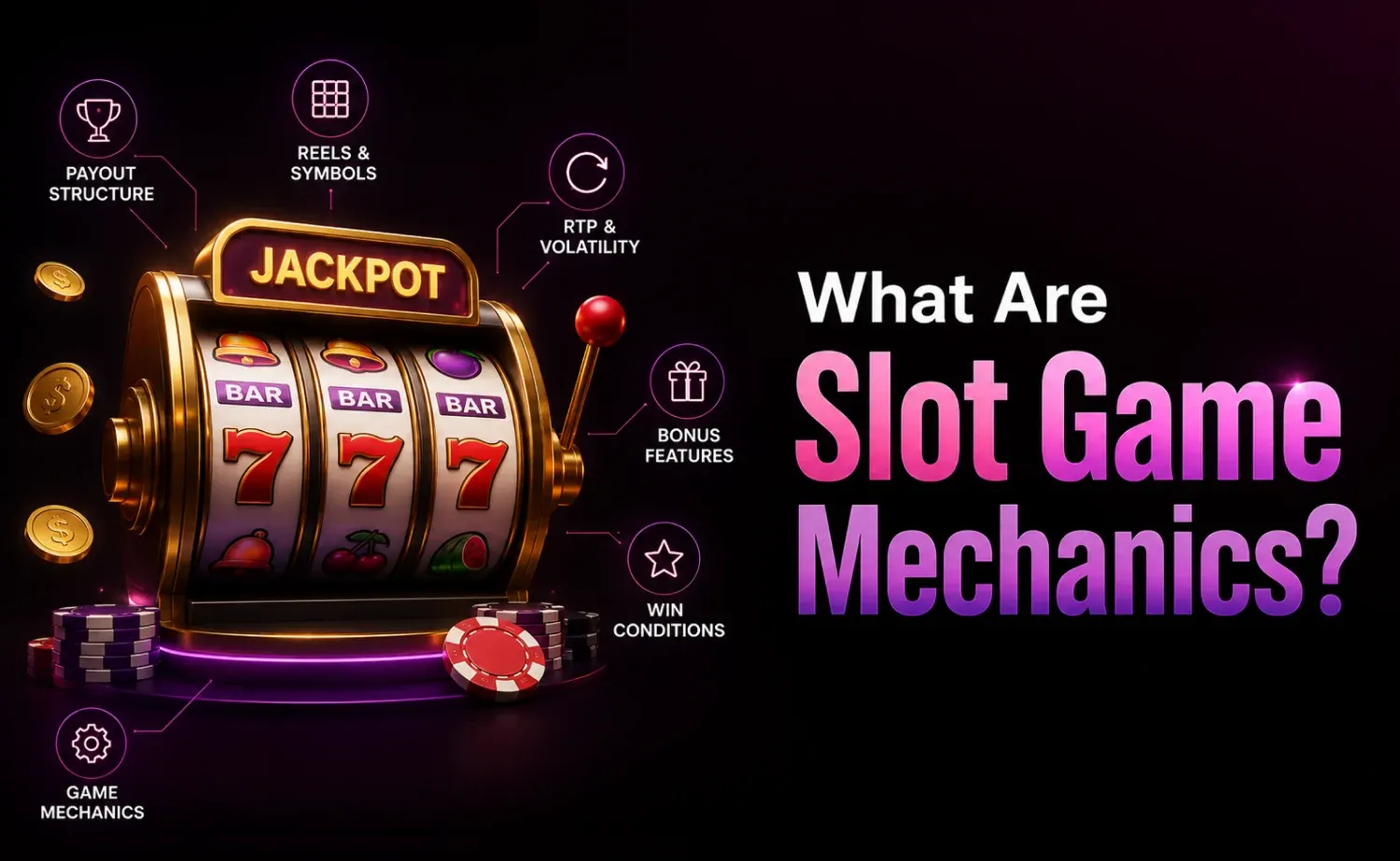
Modern online slots consist of several interconnected components that work together to create the overall player experience.
Reels are the vertical columns that contain game symbols. Traditional slots typically featured three reels, while modern video slots often include five, six, or even more reels.
The number of reels directly affects:
Five-reel formats remain the industry standard because they provide sufficient space for engaging bonus features while maintaining balanced gameplay.
Symbols determine winning outcomes. Modern slot games commonly include:
The frequency and distribution of symbols play a major role in defining game volatility and payout behavior.
Paylines represent the patterns that create winning combinations.
Common payline structures include:
Today’s players increasingly prefer flexible pay systems because they provide more opportunities for wins and feature triggers.
The betting system determines how players stake money and influences overall revenue generation.
Important betting variables include:
Operators should align betting structures with target player demographics and regional market preferences.
RTP is one of the most important metrics in slot game development.
Return to Player (RTP) represents the theoretical percentage of wagered money that a slot game returns to players over a long period. Theoretical RTP is calculated over millions of simulated game rounds and should not be interpreted as a guarantee of short-term results for individual players.
For example:
It is important to note that RTP reflects long-term mathematical expectations rather than short-term results.
Most regulated slot games fall within these ranges:
| RTP Range | Classification |
| 90%–93% | Lower RTP |
| 94%–96% | Industry Standard |
| 96%–98% | High RTP |
The ideal RTP depends on:
Many operators mistakenly assume lower RTP automatically increases profitability.
In reality, player retention often plays a larger role.
Games with balanced RTP levels frequently generate:
Understanding RTP is only one piece of the equation. The right combination of RTP, volatility, bonus features, and game mathematics can significantly impact player engagement and operator profitability. Consult with TIGGAMES to evaluate the ideal slot model for your business goals.
One of the most misunderstood concepts in slot game development is the difference between RTP and volatility.
| Factor | RTP | Volatility |
| Purpose | Long-term player returns | Risk level |
| Measures | Average payout percentage | Win frequency and size |
| Impact | House edge | Player experience |
| Timeframe | Long-term | Short and medium-term |
| Operator Focus | Revenue planning | Audience targeting |
A slot can have:
Because RTP and volatility serve different functions, they should always be evaluated together.
Volatility determines how frequently players win and how large those wins are.
It is one of the most important factors affecting player satisfaction and retention.
Low-volatility slots provide:
Best suited for:
Medium-volatility games balance risk and reward.
Characteristics include:
These games often perform best across diverse player segments.
High-volatility slots produce:
Best suited for:
Operators should align volatility with their target audience.
| Audience Type | Recommended Volatility |
| Casual Players | Low |
| Mass Market | Medium |
| VIP Players | High |
| Jackpot Seekers | High |
| Social Casino Users | Low |
Choosing the wrong volatility profile can negatively impact player retention regardless of RTP performance.
Every single slot game that is regulated uses something called a Random Number Generator to make sure the results are always unpredictable and fair. When people play these games they see the reels spinning around and symbols moving. The real result of each spin is actually decided by complicated math problems that are happening behind the scenes.
For people who’re in charge of making these slot games they really need to understand how the Random Number Generator works because it affects whether the game is following the rules, if players trust the game and if the game is honest.
The Random Number Generator is always working, making thousands of number combinations every single second even when no one is playing the game.
When a player clicks the spin button the system gets a number that matches a certain result on the reels.
This process ensures:
Importantly, RNG slot game systems do not “remember” previous spins or adjust outcomes based on player behavior.
The outcome generation process typically follows these steps:
Although the process appears simple, the mathematics behind outcome generation is highly sophisticated and carefully tested.
Most regulated markets require RNG certification from independent testing laboratories.
Common testing providers include:
Operators should ensure RNG certification is considered early during development to avoid licensing and launch delays.
Bonus mechanics are often the biggest differentiator between average-performing slots and highly successful games.
While RTP and volatility define the mathematical foundation, bonus features create excitement, anticipation, and retention.
Free spins remain one of the most popular online slot game features.
Benefits include:
Many operators use free spins as both an in-game mechanic and a marketing tool.
Multipliers increase payouts by a predetermined value.
Examples include:
Multipliers significantly enhance perceived value and create memorable win experiences.
Wild symbols substitute for other symbols to complete winning combinations.
Benefits include:
Modern slots frequently incorporate expanding, sticky, moving, or random wild variations.
Scatter symbols typically trigger special online slot game features regardless of payline position.
Common outcomes include:
Scatters create anticipation and encourage longer play sessions.
Bonus Buy allows players to purchase immediate access to bonus rounds.
Growing in popularity across many markets, Bonus Buy features offer:
However, operators should verify regulatory restrictions because some jurisdictions limit or prohibit Bonus Buy functionality.
Progressive jackpots accumulate over time as players contribute a small percentage of wagers.
These jackpots create:
Large jackpot prizes often become major promotional assets for casino operators.
Behind every successful slot game is a carefully balanced economic model.
The goal is not simply to create wins and losses but to build a sustainable gameplay economy that benefits both players and operators.
Hit frequency refers to how often a slot generates any type of winning outcome.
For example:
Hit frequency directly impacts player perception.
High hit frequency creates:
Low hit frequency often supports high-volatility gameplay.
Win distribution determines how payouts are allocated across different prize levels.
Examples include:
Balanced distribution is critical because it shapes player experience and retention.
The most successful slots create a healthy balance between risk and reward.
Too much risk may cause:
Too much reward may create:
Experienced slot mathematicians carefully calibrate this balance during development.
Player retention is one of the most important KPIs for casino operators.
Several mechanics directly influence whether players continue playing or abandon a game.
Longer sessions often correlate with improved player value.
Mechanics that increase session duration include:
Session length should be optimized without creating player fatigue.
Reward loops provide recurring moments of satisfaction.
Examples include:
These mechanics encourage repeat engagement and stronger player loyalty.
Bonus features must appear often enough to maintain excitement.
If feature triggers occur too rarely:
If they occur too frequently:
The ideal trigger frequency depends on the target audience and volatility profile.
Before beginning slot game development, operators should evaluate several strategic factors.
Different regions have different player preferences.
For example:
Understanding player expectations helps guide development decisions.
Operators should define monetization objectives early.
Questions to consider include:
Mechanics should align with overall business objectives.
More than half of casino gaming activity now occurs on mobile devices.
Casino slot mechanics should be optimized for:
Mobile-first slot game design is no longer optional.
Every target jurisdiction may have unique requirements regarding:
Compliance considerations should be incorporated from the earliest planning stages.
Choosing the RTP volatility, features and money making plan can really affect how well a game does. The TIGGAMES team helps game operators create custom slot games that focus on keeping players engaged, wanting to play more and making profits in the long run.
Before approving a slot game concept, ask the following questions:
✓ Is the RTP aligned with market expectations?
✓ Does the volatility match the target audience?
✓ Are bonus features engaging but sustainable?
✓ Is the hit frequency balanced?
✓ Does the game support long-term retention?
✓ Have compliance requirements been considered?
✓ Is mobile gameplay fully optimized?
✓ Does the math model support profitability goals?
This checklist helps reduce costly redesigns later in development.
Many operators focus heavily on themes and visual design while overlooking mathematical fundamentals.
Common mistakes include:
A mismatch between player expectations and volatility often leads to poor retention.
Too many mechanics can overwhelm players and reduce engagement.
Higher RTP does not automatically guarantee better performance.
Complex interfaces often perform poorly on mobile devices.
Regulatory issues discovered late in development can delay launches and increase costs.
Without a properly balanced game economy, even visually impressive slots can struggle commercially.
Slot mechanics are not simply technical details—they are the foundation of game performance.
The choices made during planning influence:
By knowing about RTP, volatility, RNG, hit frequency and bonus mechanics from the start operators can make choices that help players be happy and also make money in the long run.
The best slot games mix fun themes with planned math models. If the mechanics are not right even a great visual design will not keep players for long.
At TIGGAMES, we help casino operators transform concepts into market-ready slot games built around proven mathematics, engaging mechanics, and scalable technology.
Our slot game development expertise includes:
Whether you’re launching a new casino brand or expanding an existing portfolio, our team can help you design slot experiences that balance entertainment, retention, and profitability.
Contact TIGGAMES for a consultation and discover how custom casino slot mechanics can drive long-term player engagement and business growth.
Slot game mechanics are the mathematical and gameplay systems that determine how a slot game operates, including RTP, volatility, paylines, bonus features, hit frequency, and payout structures.
RTP (Return to Player) is the theoretical percentage of wagered money that a slot game returns to players over the long term. For example, a 96% RTP game theoretically returns $96 for every $100 wagered.
Volatility measures the risk level of a slot game. Low-volatility slots provide frequent smaller wins, while high-volatility slots offer less frequent but potentially larger payouts.
A Random Number Generator continuously produces random values that determine reel outcomes. This ensures every spin is independent, unpredictable, and fair.
Mechanics such as free spins, reward loops, balanced volatility, frequent feature triggers, achievement systems, and engaging bonus rounds often contribute to higher player retention.
Operators should evaluate RTP, volatility, target audience, monetization strategy, compliance requirements, mobile optimization, and overall game economics before beginning development.
RTP measures long-term player returns, while volatility measures the frequency and size of wins. A slot can have the same RTP as another game but deliver a completely different player experience due to volatility.
Slot mechanics directly influence player engagement, retention, profitability, and compliance. Understanding these systems helps operators make informed development decisions and build successful gaming products.

TIGGames provides secure & scalable casino game development solutions ready for global markets.
© 2026 TIGGames | All Rights Reserved | Sitemap | Privacy Policy
Request A Demo
Get a quick look at your potential earnings. Answer four simple questions and see your projected revenue for year one.
Keep in mind, this quick analysis is a preliminary guideline meant to kickstart your detailed market research. Best of luck!
Enter your email to receive your full cost breakdown, including projected net revenue, operating margin, and editable line items for your own planning.
Your inputs are used only to generate and deliver your report and are handled in line with TIGCasino's Privacy Policy.