

Prish K is an iGaming expert with 8+ years' experience empowers operators with scalable sportsbook, casino, sweepstakes, and prediction market solutions.
(TL;DR)
Germany is now one of the most important regulated gambling jurisdictions in the global iGaming industry. With a large player population, strong consumer demand, and growing acceptance of licensed online gaming, the market presents significant opportunities for casino operators, game providers, aggregators, and platform suppliers.
However, Germany is also one of the most demanding jurisdictions from a compliance perspective.
Unlike many international gambling markets where regulation primarily focuses on licensing and taxation, Germany’s framework directly affects game mechanics, player onboarding, payment systems, responsible gambling controls, platform architecture, and marketing operations.
For casino game developers, success in Germany requires much more than creating entertaining content. It requires a deep understanding of regulatory and compliance requirements that influence every stage of the product lifecycle.
As enforcement continues to increase throughout 2025 and 2026, operators and suppliers that fail to align with German regulations face growing commercial and legal risks.
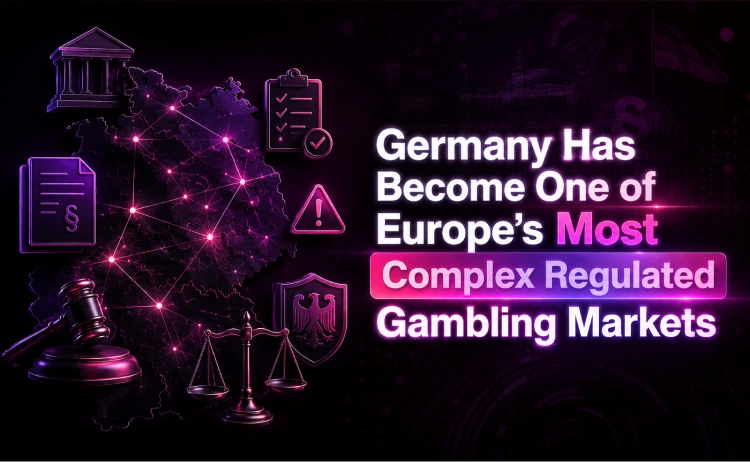
Germany’s modern gambling framework is built around the Interstate Treaty on Gambling, commonly referred to as GlüStV 2021.
The treaty was introduced to create a nationwide regulatory structure for online gambling while strengthening player protection and reducing illegal gambling activity.
A key objective of the framework is balancing market access with responsible gambling measures. As a result, Germany has adopted a significantly more restrictive approach than many other regulated jurisdictions.
For operators and developers, this means compliance requirements influence both operational procedures and product design decisions.
The regulatory environment is overseen by the Gemeinsame Glücksspielbehörde der Länder (GGL), which acts as Germany’s central gambling authority.
The GGL serves as the primary supervisory authority for online gambling activities across Germany.
Its responsibilities include:
Since becoming fully operational, the GGL has significantly expanded its enforcement capabilities.
The authority has demonstrated a clear willingness to take action against unlicensed operators, unauthorized advertising activities, and businesses that fail to meet regulatory standards.
For casino game providers and platform developers, the GGL’s growing influence means compliance can no longer be viewed as a secondary business consideration.
One of the most misunderstood aspects of German gambling regulation involves the distinction between different gambling product categories.
Many international businesses assume all online casino products operate under the same licensing structure.
In reality, Germany treats several gambling verticals differently.
| Product Category | Regulatory Approach |
| Virtual Slot Games | Nationwide licensing framework |
| Online Poker | Nationwide licensing framework |
| Roulette | Separate state-level considerations |
| Blackjack | Separate state-level considerations |
| Baccarat | Separate state-level considerations |
| Live Casino Games | State-specific regulatory models |
This distinction creates significant challenges for developers and operators.
A company planning to launch virtual slots may face a different approval pathway than a business offering live dealer roulette or blackjack products.
Understanding these differences early can prevent costly compliance mistakes and launch delays.
The German market is particularly known for its strict slot regulations.
These restrictions were introduced as part of the country’s broader responsible gambling strategy and directly affect how casino games are designed and monetized.
Unlike many international markets, Germany imposes product-level restrictions that developers must accommodate during production.
The result is a market where many global slot games require localized versions before they can be legally distributed.
One of the most well-known German gambling regulations is the €1 maximum stake limit for virtual slot games.
This rule fundamentally changes game economics.
Many slot games developed for international markets allow significantly larger wagers. Under Germany’s regulatory framework, however, players cannot exceed €1 per spin.
For developers, this creates several challenges.
Game mathematics must often be recalculated to ensure profitability and player engagement remain balanced. Jackpot structures, volatility models, and reward systems frequently require adjustment.
A slot game designed around higher wagering behavior may not perform effectively without substantial optimization for the German market.
Germany also requires a minimum interval of five seconds between slot spins.
This rule is designed to reduce gambling intensity and encourage more controlled gameplay behavior.
From a development perspective, this requirement changes traditional engagement strategies.
Many modern slot games rely on rapid gameplay loops that generate frequent player interactions. Germany’s regulations intentionally slow this pace.
As a result, developers must find alternative methods to maintain player engagement.
Successful German-compliant games often focus more heavily on storytelling, visual quality, feature depth, and long-term progression systems rather than relying on high-speed gameplay.
Two of the most significant gameplay restrictions involve autoplay functionality and bonus buy mechanics.
Autoplay systems are prohibited within Germany’s regulated virtual slot environment. Every game round must be initiated manually by the player.
Similarly, bonus buy features that allow players to purchase direct access to bonus rounds are not permitted.
These restrictions create substantial design implications.
Many modern slot titles incorporate bonus buy mechanics as a core monetization and engagement feature. When targeting Germany, developers must redesign bonus systems to ensure all features are triggered organically through gameplay.
The challenge is maintaining excitement and retention without relying on mechanics commonly used in other markets.
Germany’s compliance framework extends far beyond game mechanics.
Licensed operators must integrate with centralized regulatory systems designed to strengthen player protection and market oversight.
OASIS is Germany’s nationwide self-exclusion database.
Before allowing gambling activity, operators must verify whether a player has been excluded from participating in gambling services.
This system plays a central role in Germany’s responsible gambling strategy.
For platform providers, seamless OASIS integration is a critical compliance requirement.
LUGAS serves as Germany’s centralized gambling monitoring platform.
The system supports deposit limit enforcement, player protection measures, and regulatory oversight.
Operators must ensure their technical infrastructure can communicate effectively with the LUGAS framework.
For developers building casino platforms, wallet systems, and account management tools, integration readiness should be considered from the earliest development stages.
Germany’s approach to responsible gambling extends beyond gameplay restrictions.
The market incorporates player spending controls that influence account management systems and financial operations.
One of the most significant features is the nationwide deposit monitoring framework.
This system helps enforce player protection measures across licensed gambling operators.
For casino platform developers, this creates important technical considerations.
Account management systems must support spending controls, player monitoring capabilities, and responsible gambling tools that align with regulatory expectations.
Companies entering the German market often underestimate the complexity of these requirements.
KYC, AML, and Payment Verification Requirements:
Identity verification plays a major role in Germany’s regulatory framework.
Operators must implement robust Know Your Customer (KYC) procedures and Anti-Money Laundering (AML) controls.
These requirements influence several areas of platform development.
Key compliance considerations include:
Developers building casino platforms for Germany must ensure these capabilities are integrated into the overall system architecture.
Failure to do so can create significant regulatory risks.
Marketing compliance is another area where Germany applies strict regulatory oversight.
Advertising activities must adhere to detailed rules designed to protect consumers and reduce gambling-related harm.
Promotional content cannot target minors, vulnerable individuals, or create misleading impressions regarding gambling outcomes.
For operators and suppliers, advertising compliance increasingly affects product development decisions.
CRM systems, bonus engines, affiliate tools, loyalty programs, and promotional platforms may all require adjustments to align with German regulations.
This makes regulatory awareness important not only for legal teams but also for product managers and development teams.
The growing popularity of cryptocurrency gambling has attracted considerable attention within the iGaming industry.
However, Germany’s regulatory framework presents challenges for operators seeking to launch crypto-focused gambling products.
Licensed gambling operations are generally expected to operate within regulated payment and financial monitoring frameworks.
This creates complications for business models built entirely around cryptocurrency transactions.
For developers and operators exploring blockchain gambling solutions, regulatory analysis should occur before significant development investments are made.
Understanding payment compliance requirements early can prevent costly strategic mistakes.
Germany’s gambling enforcement landscape continues to evolve.
The GGL has expanded its monitoring capabilities and demonstrated a stronger willingness to pursue enforcement actions against non-compliant businesses.
Areas receiving particular attention include:
The direction of regulation suggests increased oversight rather than relaxation.
Businesses planning long-term market participation should expect compliance requirements to become more sophisticated over time.
Despite the availability of regulatory guidance, many developers continue to encounter similar compliance challenges.
One common mistake is assuming that a game approved in another jurisdiction can automatically enter Germany without modification.
Another issue involves treating compliance as a final certification step rather than a core development requirement.
Additional mistakes include:
Addressing these issues early significantly improves development efficiency and regulatory readiness.
Developing casino games for Germany requires a compliance-first approach.
Rather than adapting products after development is complete, successful suppliers integrate regulatory requirements into planning, design, development, testing, and deployment workflows.
A structured approach often includes:
| Development Phase | Compliance Focus |
| Planning | Regulatory assessment |
| Game Design | Product restrictions review |
| Development | Technical compliance integration |
| Testing | Functionality and regulatory validation |
| Certification | Documentation and approvals |
| Deployment | Monitoring and maintenance |
This methodology helps reduce launch delays and supports long-term regulatory compliance.
Germany has established one of the world’s most comprehensive online gambling regulatory frameworks. From stake limits and gameplay restrictions to player protection systems, identity verification requirements, advertising controls, and centralized monitoring infrastructure, compliance influences nearly every aspect of casino game development.
For operators, game studios, and platform providers, success in Germany depends on understanding these requirements from the very beginning. Businesses that approach compliance strategically can accelerate market entry, reduce certification challenges, and build stronger relationships with licensed operators.
This is where an experienced development partner becomes a valuable asset.
TIGGAMES is a leading casino game development company helping operators, startups, aggregators, and gaming brands build market-ready casino products for regulated jurisdictions. From custom slot game development and crash game development to RNG-certified casino games, table games, platform development, and compliance-focused solutions, TIGGAMES delivers scalable gaming products designed for long-term growth in regulated markets such as Germany and beyond.
The GGL is Germany's central gambling regulator responsible for licensing, compliance monitoring, enforcement actions, and supervision of online gambling activities.
Licensed virtual slot games in Germany are restricted to a maximum wager of €1 per spin.
The rule was introduced to reduce gambling intensity and support responsible gambling objectives.
No. Autoplay functionality is prohibited for licensed virtual slot games.
No. Bonus buy mechanics that allow direct access to bonus rounds are generally prohibited in licensed virtual slot games.
OASIS is Germany's nationwide self-exclusion system that prevents restricted players from accessing licensed gambling services.
LUGAS is Germany's centralized gambling monitoring system used for player protection and regulatory oversight.
No. Online casino table games may be subject to different state-level regulatory models than virtual slots.
Crypto-focused gambling models face additional regulatory challenges and must carefully assess compliance obligations before entering the market.
Developers should focus on game restrictions, responsible gambling systems, KYC and AML requirements, platform integrations, documentation, and regulatory-ready architecture.

TIGGames provides secure & scalable casino game development solutions ready for global markets.
© 2026 TIGGames | All Rights Reserved | Sitemap | Privacy Policy
Request A Demo
Get a quick look at your potential earnings. Answer four simple questions and see your projected revenue for year one.
Keep in mind, this quick analysis is a preliminary guideline meant to kickstart your detailed market research. Best of luck!
Enter your email to receive your full cost breakdown, including projected net revenue, operating margin, and editable line items for your own planning.
Your inputs are used only to generate and deliver your report and are handled in line with TIGCasino's Privacy Policy.